0
PRE-SUBMISSION ENGLISH-LANGUAGE EDITING

Societal Transformation: AI and Big Data Journal (AIBD) is a free online multidisciplinary journal in the field of computer sciences with no publication/review fee.
PRE-SUBMISSION ENGLISH-LANGUAGE EDITING
Authors for whom English is a second language may choose to have their manuscript professionally edited before submission to improve the English. An independent editing service can be found at Language Lab. All services are paid for and arranged by the author, and use of this service does not guarantee acceptance or preference for publication.
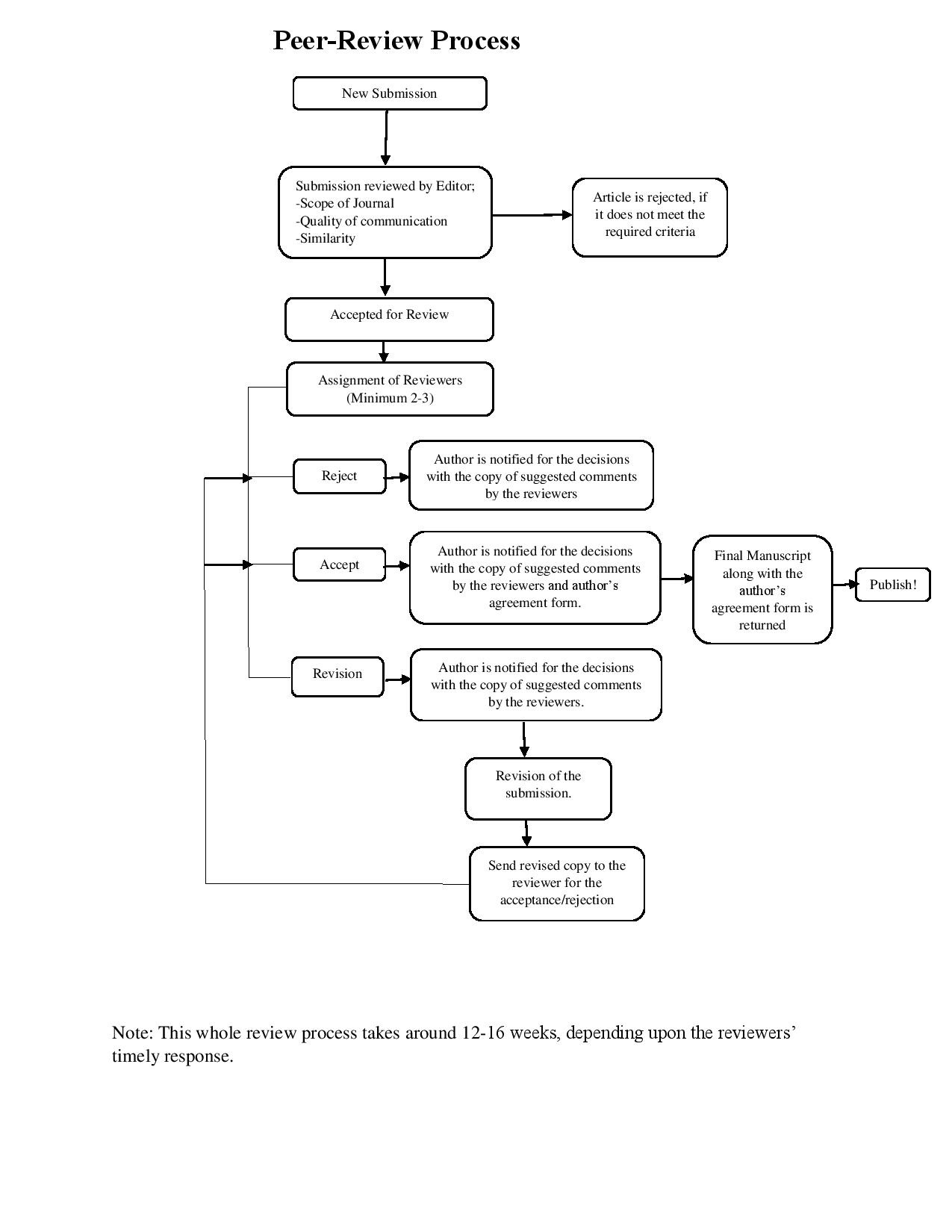
Quality and validity are the cornerstones of our journal. We employ a rigorous double-blind peer review process to ensure that only high-quality publications find their place in our journal. Papers are meticulously reviewed by experts recommended by our esteemed editorial board. The identities of authors and reviewers are kept confidential throughout the review process. All publication decisions are made by our Editors-in-Chief based on the thorough reports provided by the referees.
Join us at Societal Transformations: AI and Big Data in our quest to explore, innovate, and contribute to the global knowledge domain in the ever-evolving field of artificial intelligence and big data. Together, let's shape the future of computing sciences.
The authors should guarantee that their work is entirely original and that if they have utilized the work and/or words of others, this has been properly credited or quoted. All manuscripts submitted to the journal will be checked for originality using Ithenticate software. The maximum amount of plagiarism that may be tolerated is 17%. The editor of the journal, on the other hand, may commence the investigation by evaluating any allegations of plagiarism, self-plagiarism, or text recycling. If the assertions are correct, all identified authors will be contacted in order to conduct an inquiry about the overlapping material. Further feedback from the Editorial Board members and the author's institution may be sought if needed.
The journal's decision will be based on the author's research and response (s). Depending on the nature and severity of the problem, the following steps may be taken:
Note: In each of the scenarios, the author's institution may also be contacted.
The journal encourages editorial changes, and author(TM)s genuine appeals; however, it is essential to understand that the editor(TM)s ultimate decision is a product of broad discretion that aligns with the best interests of the journal. Thus, for the appeals to be considered, the provision of concrete evidence or new data by the author(s) that addresses and alleviates the concerns of the reviewers and editors is a major requirement.
The editor(s) will consider appeals such as:
Furthermore, receival of an eligible appeal can lead to the following:
In case of an appeal or a complaint, the author(s) should email the editor at editjms@iuk.edu.pk.
After a paper is published, we generally do not allow making any changes to the paper. However, the editorial board may allow corrections in the published paper in exceptional cases.
The corrections may be allowed to rectify unintentional miscalculations, human lapses or technical errors in the published paper.
The published papers may be retracted if a clear evidence of fraudulent data, plagiarism or unethical publication practices is found.
The copyright infringement or non-disclosure of conflict interest may also result in retraction of the published papers.
The decision of correction or retraction will be made on case to case basis following the COPE's Retraction Guidelines.
The decision of the editorial board with regards to correction or retraction will be final and cannot be challenged.
Our repository policy aims to increase the access and citation of the published articles in our Journal.
Societal Transformation: AI and Big Data Journal allows authors to archive their published articles in an institutional repository which should be on a non-profit server. The authors can also self-archive their published articles on their personal website or web space.
A link to the Journal's home page or the article's DOI number must be mentioned along with the deposited article in the institutional or personal repository.
What is a DOI?
DOI stands for digital object identifier. It is a unique identifying code assigned to each article at the time of publication on the IQRA University website. DOIs are distributed by independent registration agencies, such as CrossRef.
IMPORTANT: All papers will be acknowledged on receipt by email and will receive a preliminary editorial review within four weeks. Papers of high interest will be sent out for external review. We aim to notify authors of acceptance, rejection or need for revision within four months of submission. Recently, due to the high volume of submissions and demands on referees, it may not always be possible to meet this target, but we aim to have your manuscript reviewed within six months.
Reporting Standards
Authors of original research should present an accurate account of the work performed as well as an objective discussion of its significance. Underlying data should be represented accurately in the paper. A paper should contain sufficient detail and references to permit others to replicate the work. Fraudulent or knowingly inaccurate statements constitute unethical behavior and are unacceptable.
Authors are asked to provide the raw data in connection with a paper for editorial review, if practicable, and should in any event be prepared to retain such data for a reasonable time after publication.
The authors should ensure that they have written entirely original works, and if the authors have used the work and/or words of others that this has been appropriately cited or quoted.
Proper acknowledgment of the work of others must always be given. Authors should cite publications that have been influential in determining the nature of the reported work.
Authorship should be limited to those who have made a significant contribution to the conception, design, execution, or interpretation of the reported study. All those who have made significant contributions should be listed as co-authors. Where there are others who have participated in certain substantive aspects of the research project, they should be acknowledged or listed as contributors. The corresponding author should ensure that all appropriate co-authors and no inappropriate co-authors are included on the paper, and that all co-authors have seen and approved the final version of the paper and have agreed to its submission for publication.
All authors should disclose in their manuscript any financial or other substantive conflict of interest that might be construed to influence the results or interpretation of their manuscript. All sources of financial support for the project should be disclosed.
When an author discovers a significant error or inaccuracy in his/her own published work, it is the author's obligation to promptly notify the journal editor and cooperate with the editor to retract or correct the paper.